
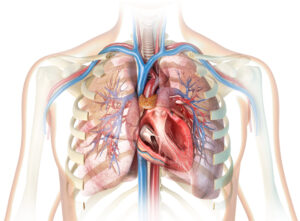
 September 4, 2026 – Did you know the right ventricle of the human heart has a thinner exterior muscular wall compared to that of the left ventricle?
There is an physiological explanation for this difference. The human heart functions more like a vortex as compared to a pump. Since the lungs are near the right ventricle, blood circulation to absorb oxygen in the lungs normally operates under relatively low pressure.
The exterior wall of the left ventricle needs to be thicker with more muscular force potential since it receives oxygenated blood returning from the lungs and higher pressures are required to circulate blood throughout the body including the brain, muscles and other organs.
When the Right Ventricle Comes Under Stress
The right ventricle normally circulates the blood at low-resistance pressures. However, the thinner exterior wall of the right ventricle is highly sensitive to changes in blood pressures and sudden stresses. Although rupture is extremely rare, underwater pressure (e.g., deep scuba diving) or exposure to extremely cold water can put intense strain on the right side of the heart.
Additionally, the airways of the lungs can become inflamed from respiratory infections making it difficult to breathe and adding stress to the right ventricle of the heart. Blockages of the lungs such as from blood clots reduce the oxygen energy absorbed into the blood needed for energy healing .. also adding more stress to the right ventricle.
Our Observations in the Respiratory Hydration Properties of DiTetra Gas
We have observed the respiratory hydration properties of DiTetra Gas either by individuals breathing the gas directly from the WIT machine or drinking Watt-Ahh that is infused with DiTetra Gas. Either way seems to support the lungs and heart functions of individuals infected with the Covid virus or suffering from the respiratory dysfunction of pneumonia. Our theory is that DiTetra Gas with its electron flow and activated oxygen in the blood supplemented the oxygen in the lungs of Covid patients who were at risk of respiratory failure and assisted in recovery back to normal blood pressures on the right ventricle.
Additionally, there are testimonials on blood clots that dramatically reduce in size and number since the electron flow of DiTetra Gas in the blood repels the clustering of the platelets.
Our working hypotheses have focused on the electron-rich and activated-oxygen characteristics that we associate with DiTetra Gas and Watt-Ahh. We believe these properties warrant more scientific research performed by credible parties on understanding the mechanisms on how they interact with blood, lung function, oxygen utilization or cellular energy production.