
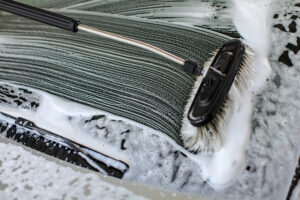
 May 12, 2026 – Clean is seeing clearly with our own eyes … even through a clean windshield. After scrubbing bug smears from a windshield, even a strong rinse from a garden hose can leave behind a thin film of bio-organic residue — commonly called “bug splatter.” This residue often causes oily smears, streaks, and white water spots that reduce visibility through the windshield.
Our tip after washing and rinsing your windshield is simple: pour approximately two ounces of Watt-Ahh across the glass and run your windshield wipers several times for a crystal-clear final rinse. Watt-Ahh helps lift and suspend remaining surface particles so they glide away with the movement of the wipers — leaving a remarkably clean finish without oily residue or water spotting. Try it out!
Why Watt-Ahh® Cleans Differently
The unique molecular structure of Watt-Ahh supports both surfactant and emulsion-like properties that help trap dirt, oils, and residues so they may be more easily rinsed away. When combined with small amounts of conventional cleaning solutions, Watt-Ahh may also help enhance overall cleaning efficiency while reducing the amount of harsh chemicals needed.
In Search of Less-Toxic Cleaning Solutions
For thousands of years, humans have searched for better ways to clean and sanitize, many times all they had to use was polluted water. Over 3,000 years ago, the first known soap to clean human bodies was made with a combination of fats and ashes. Later, the same chemicals used to preserve dead bodies, urine and rough substances (e.g., sand, clay and pumice) became ingredients to make a variety of soaps through the centuries.
In the 20th Century, rising demand for human hygiene and disease prevention caused a soap demand that exceeded that of the availability of fats (or lards). Synthetic surfactants, chlorine/bleach and phosphates replaced fats for more powerful disinfectant in laundry detergents.
The trend for “greener” products using less toxic cleaning solutions (e.g., vinegar) began to rapidly grow in the early 2000’s.
Modern cleaning products use advanced technologies such as enzyme-based cleaners that break down organic materials like food stains and pet urine accidents. While enzyme cleaners are generally considered safe, some products with prolonged exposure may cause respiratory irritation or skin sensitivity in humans.
Can Watt-Ahh Make Cleaning Safer? Yes
Watt-Ahh is not a disinfectant by itself, but a lower volume of disinfectant chemicals can be added to Watt-Ahh to lower potential toxicity exposure while cleaning.
Watt-Ahh will emulsify oils such that spraying on kitchen counters and in microwaves for easy wipe-away cleaning without using chemical cleansers.
Watt-Ahh will keep coffee makers and tea kettles cleaner (less calcium buildup) to deliver more flavorful hot beverages.
Watt-Ahh is great for keeping C-pap devices and nebulizers cleaner for safer breathing.
Added to the washing machine basin, Watt-Ahh works with laundry detergent for better clothes cleaning.
Watt-Ahh is pure water in an activated form and is non-allergenic. Also, drinking it will keep you hydrated while cleaning.
For the entire 2026 Series on Angel Quest Water, go to this link.